GERACLE stands for ‘Geomagnetic Excursions and Reversals: Establishing their Atmospheric and Climatic Effects’. The aim of the project is to understand the consequences of polarity reversals of the Earth's magnetic field for the atmosphere and our habitat. The Earth's magnetic field provides a natural protective shield against dangerous particles from the solar wind and cosmic radiation. When polarity reversals occur, the field weakens and changes its shape – with sometimes significant consequences for life on Earth. The project is focussing on the entire Sun-Earth system in order to investigate their interactions under unusual magnetic field conditions and a wide range of solar activity and climatic conditions.
Background: Change and role of the Earth's magnetic field
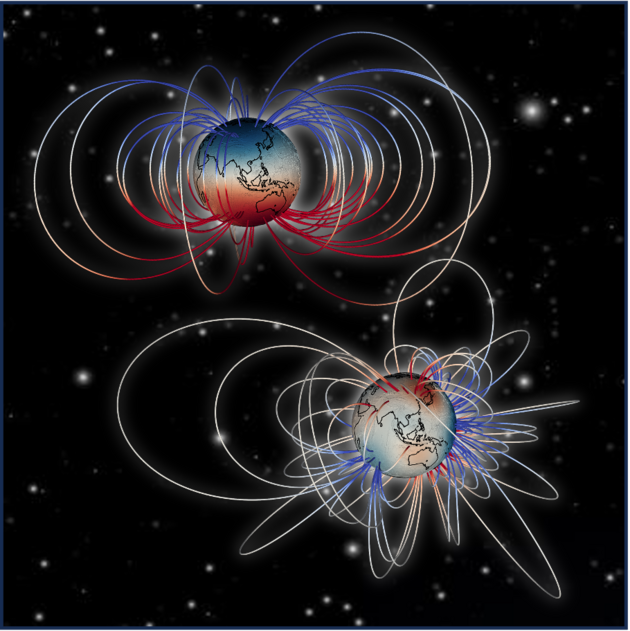
The Earth's magnetic field acts as a protective shield for our planet against solar wind and cosmic radiation, which determine the so-called space weather. The Earth's magnetic field originates in its liquid outer core and therefore varies slightly, but continually, in strength and direction. In the course of the Earth's history, however, the magnetic field has also completely reversed polarity several times - permanently or briefly, in the form of so-called reversals and polarity excursions. These extreme field changes are accompanied by a drastic decrease in the magnetic field strength, but also by an increase in the complexity of the field geometry. For example, more than two poles can form. This significantly weakens and changes the protective shield.
The last permanent field reversal, known as the Matuyama-Brunhes, took place 780,000 years ago; the last short-term polarity reversal occurred 41,000 years ago during the so-called Laschamps excursion. However, after around 1500 turbulent years, the magnetic field then returned to its original, comparatively stable polarity. Such events will occur again in the future, even if not in the near future.
The ERC project GERACLE in detail
The ERC project GERACLE investigates the effects of past and future reversals and polarity swings of the Earth's magnetic field on our habitat.
Previous studies, which made simplistic assumptions and analysed correlations rather than the full physical relationships, are inconclusive. They show a broad spectrum of possible effects: from ‘no influence of the field polarity on our habitat’ to strong climatic consequences and resulting mass extinctions of living organisms.
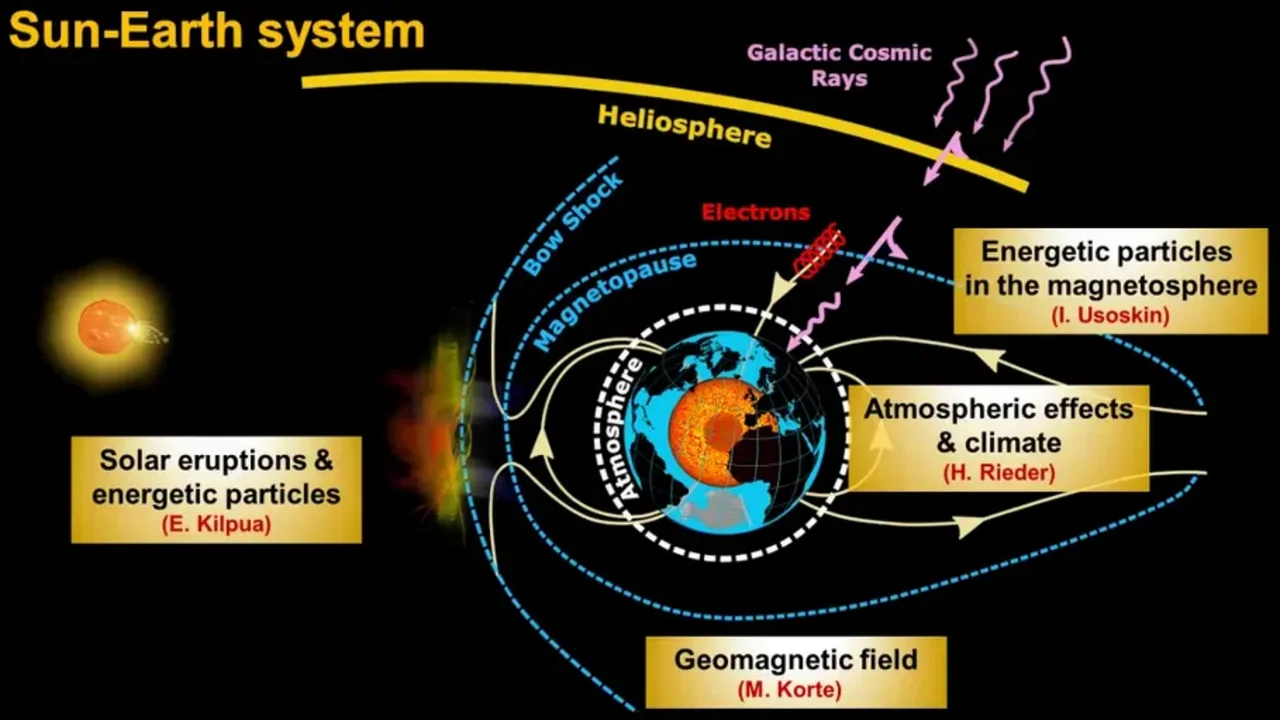
For the first time, GERACLE will comprehensively analyse the complex physical relationships in the entire Sun-Earth system during very different states of the Earth's magnetic field. It will consider the magnetosphere, but also the Sun and the climate, which is strongly influenced by other factors.
The GERACLE management team consists of four interdisciplinary members. For the first time, GERACLE brings together expertise on the long-term development of the Earth's magnetic field, the magnetosphere, solar activity and solar-terrestrial relationships as well as radiation processes in the Earth's environment, and on atmospheric processes and Earth system modelling.
Key objectives of the project
The main goal of GERACLE is to develop a unified physical framework for the Sun-Earth system considering unusual, but realistic geomagnetic field configurations. This will allow to analyse magnetospheric and atmospheric processes under changing geomagnetic field, climate and solar conditions. The results of the project will not only provide information about specific events in the Earth's history, but also important insights into solar-terrestrial relationships under a significantly changing geomagnetic field and the assessment of future space weather hazards. In particular, it aims to answer the long-standing question of how serious the effects of geomagnetic reversals and polarity excursions can be on the Earth's environment.
The contributions of the individual partner institutions
Geo/Paleomagnetism
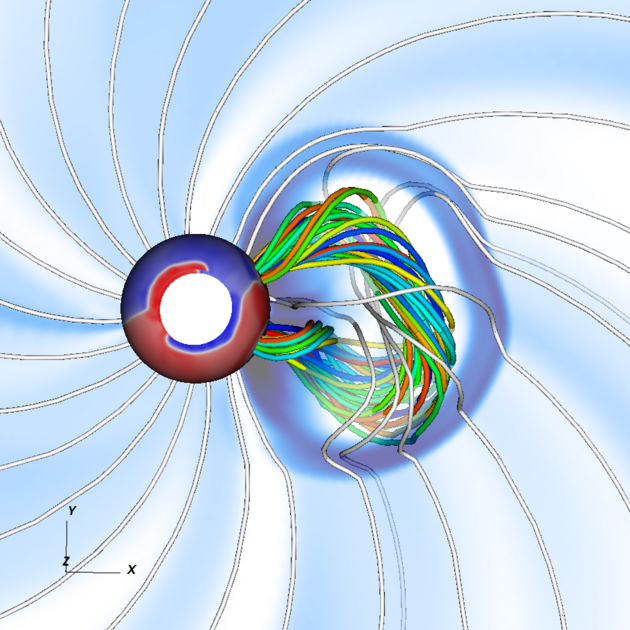
Solar-Terrestial Relations
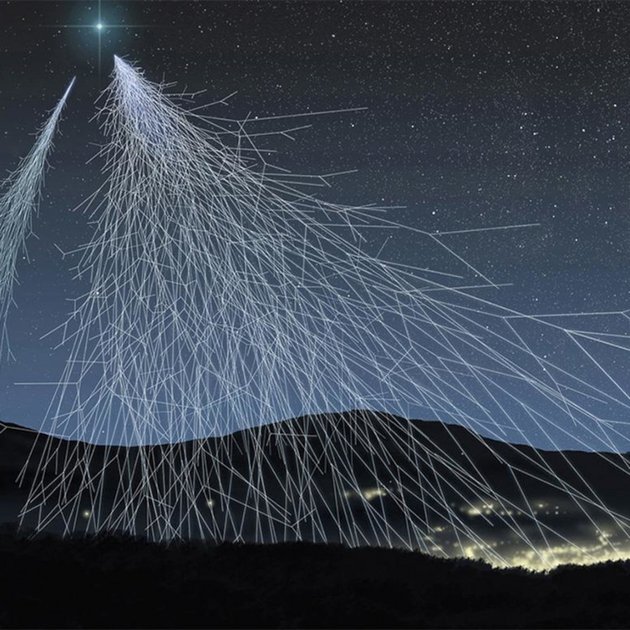
Radiation and atmosphere