Skip to main navigation Skip to main content Skip to page footer

Core sampling in Bremen

Created by Rahel Paasch |

From the 8th to the 12th of June 2026, Louise Dauchy-Tric, Pablo Rivera Perez, Shahnoor Alam and Rahel Paasch from GFZ visited the MARUM in Bremen, Germany.


They sampled two marine sediment cores from ODP Leg 175 – Site 1085 and ODP Leg 155 – Site 932A which were taken on the cost of south-west Africa and at the Amazon fan, respectively. Based on available age-models and previously obtained low-resolution paleomagnetic records, two sections where targeted covering the Brunhes-Matuyama reversal (~773 thousand years ago) and the Laschamps excursion (~41 thousand years ago). Around 800 samples were taken from 29 core sections and will be analysed in the Geomagnetic Laboratory in Potsdam in the next weeks. The results obtained will allow us to better constrain the behaviour of the geomagnetic field during the Brunhes-Matuyama reversal and the Laschamps excursion, in areas with few data available.
Back
Show larger version
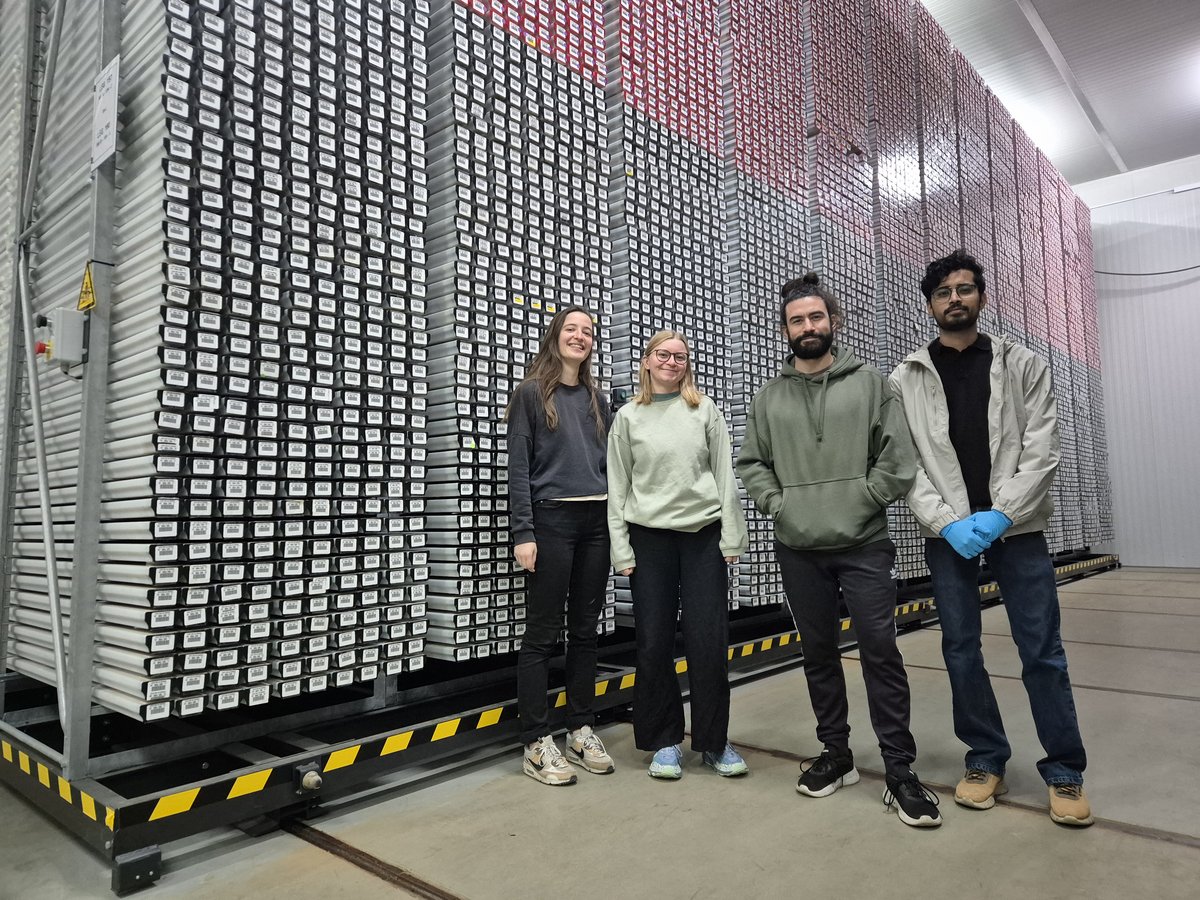
Louise Dauchy-Tric, Rahel Paasch, Pablo Rivera and Shahnoor Alam in the IODP Core repository Bremen, Germany. Red marked cores are archive halves that will not be sampled, black marked cores are working halves that can sampled for multiple analysis purposes.
Show larger version
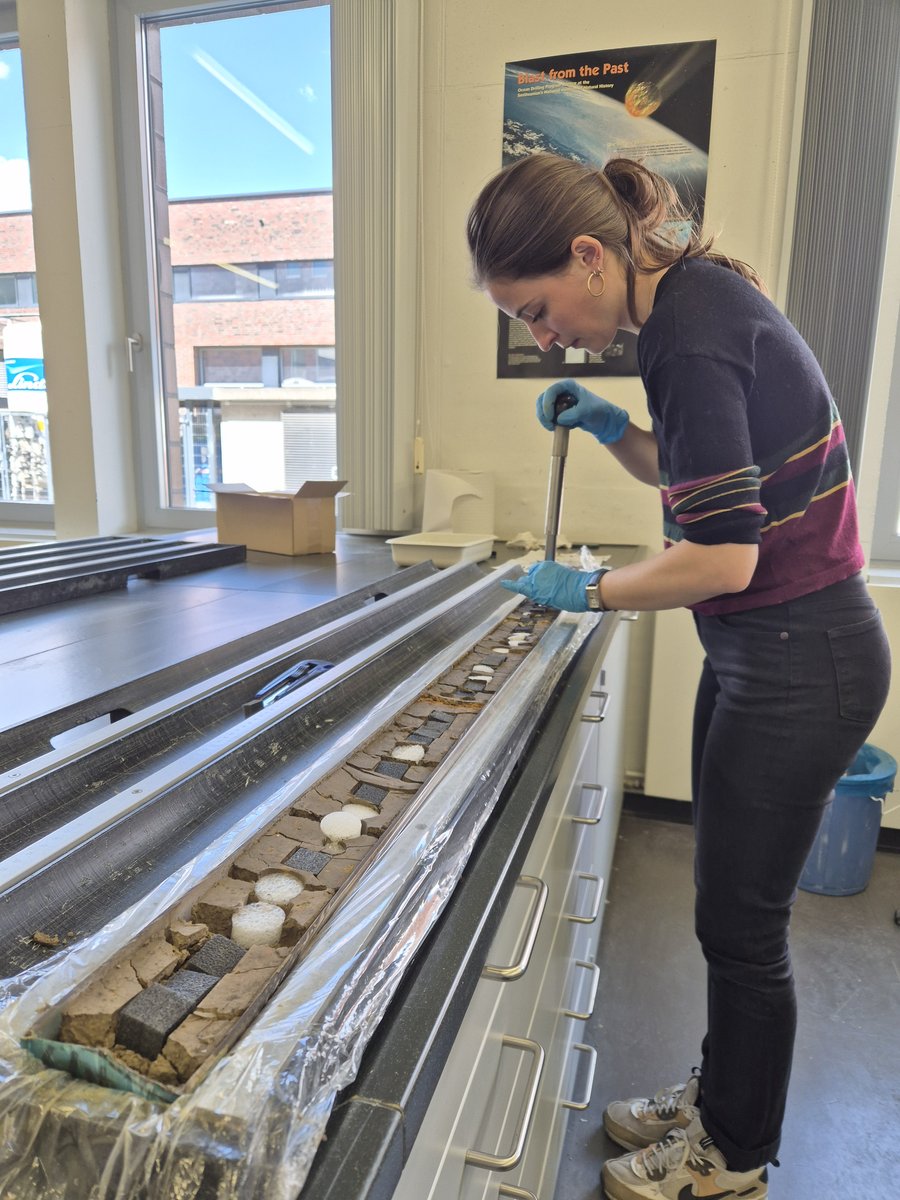
Louise Dauchy-Tric sampling one of the core sections with a sampling device. Holes of magnetic samples are stuffed with grey Styrofoam. Holes from previously taken samples for biomarker or provenance analysis are filed with white Styrofoam.
Show larger version
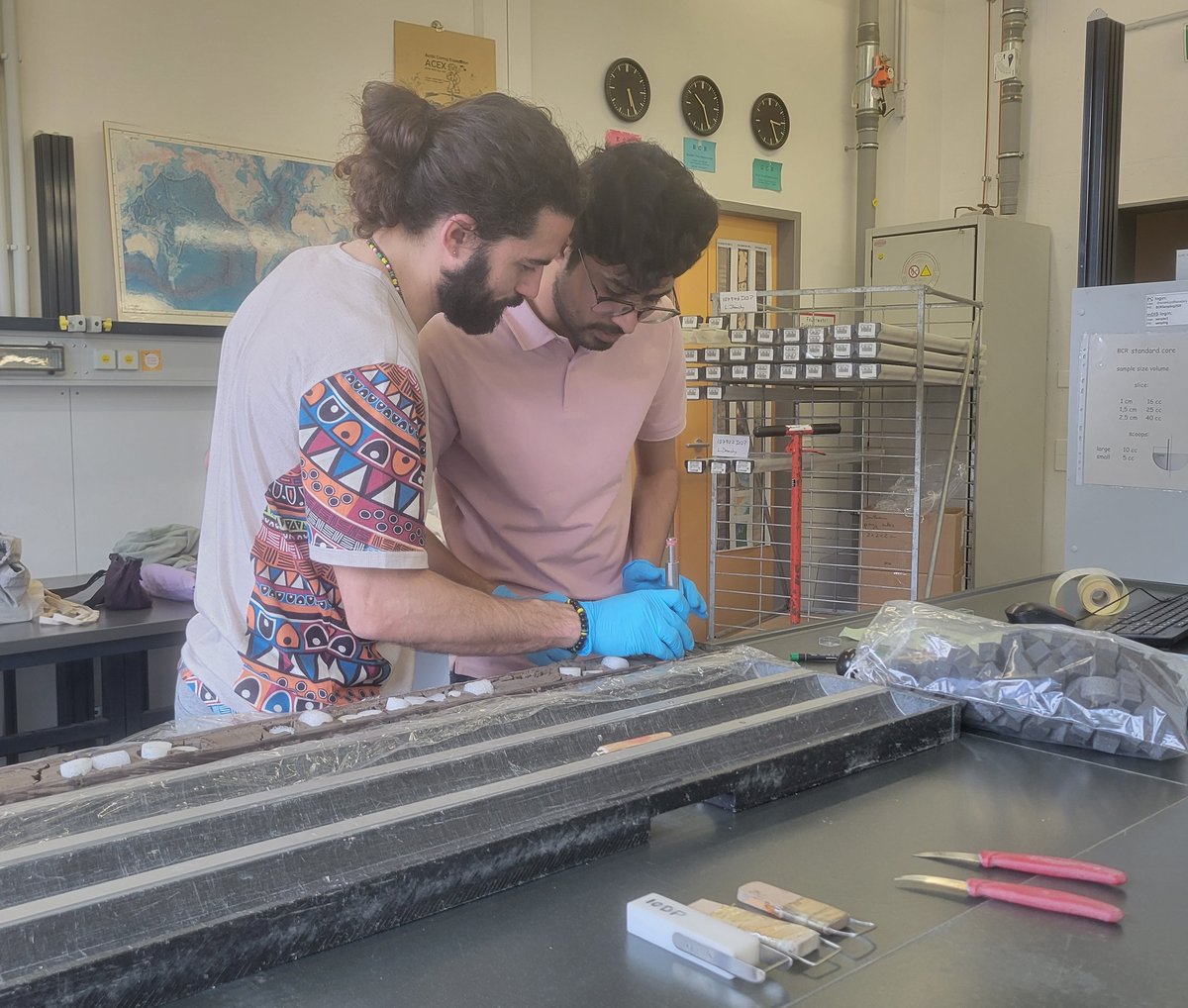
Pablo Rivera and Shahnoor Alam deciding where to take a sample from one core section.
Show larger version
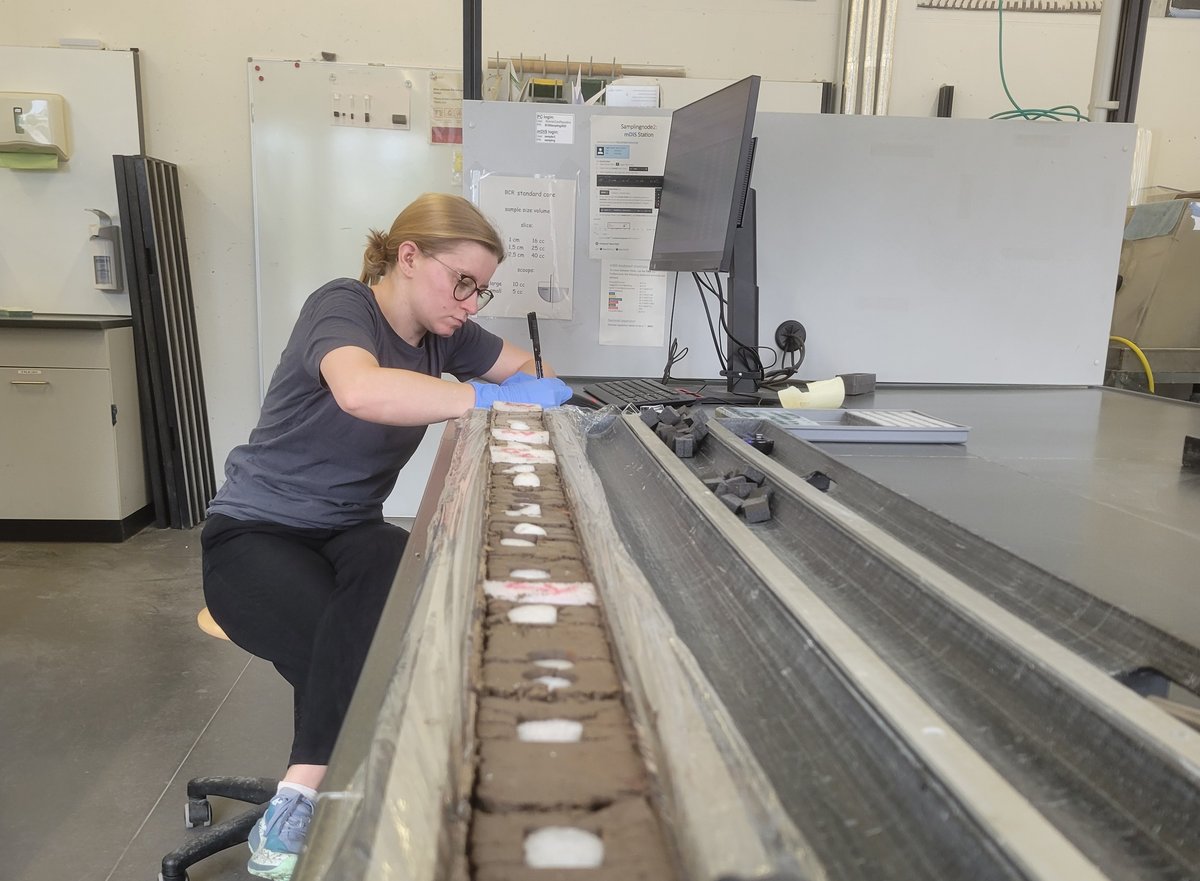
Rahel Paasch preparing material to sample a core section. For each sample a plastic cube has to be prepared with the core name, the section number, the sampling depth and the direction the core was taken in.