
What is Paleomagnetism?
Earth is surrounded by a magnetic field that shields us from harmful solar radiation. This field is not static - it constantly slowly changes, and has even changed its polarity completely multiple times over Earth’s history. What is now the magnetic north pole used to be the south pole and vice versa. The scientific field of paleomagnetism studies past geomagnetic field evolution by investigating magnetic signals preserved in sediments, ancient rocks and even archaeological structures, acting like natural recorders of Earth's magnetic history.
How do sediments record the magnetic field?
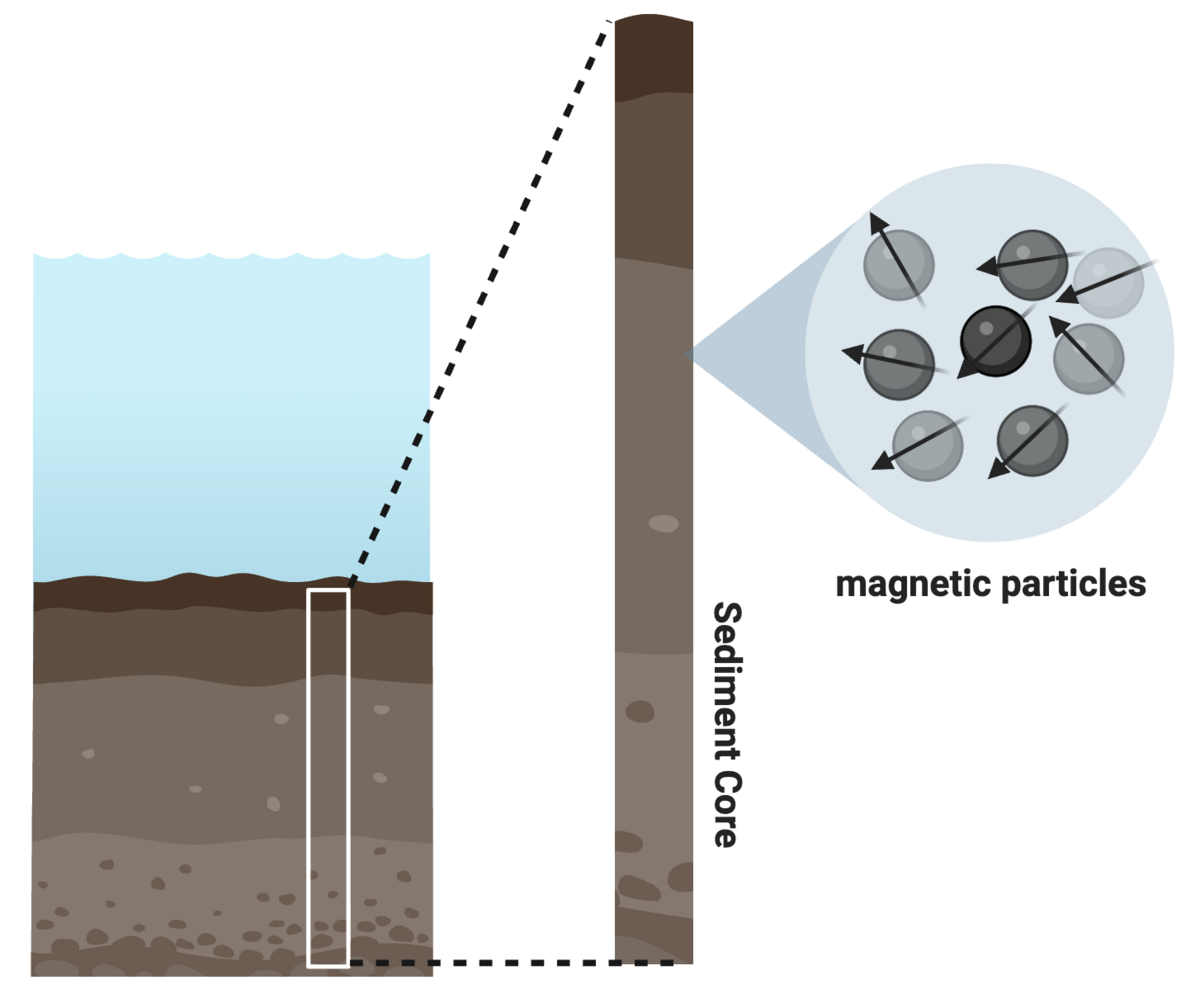
When microscopic magnetic mineral particles settle through water and accumulate on the seafloor or lakebed, they align themselves with the Earth's magnetic field, much like compass needles. Once buried and compacted over time, this alignment is locked in place, preserving a snapshot of what the magnetic field looked like thousands or even millions of years ago. By extracting long cores of marine or lake sediments and analyzing them in a paleomagnetic laboratory, scientists can reconstruct how the magnetic field has evolved through time.
Reversals, Excursions, and Why They Matter
The last full polarity reversal occurred around 780,000 years ago (so-called Matuyama-Brunhes reversal). In addition to full reversals, there are shorter-lived events called excursions, during which the field temporarily shifts direction on a global or regional scale before returning to its previous orientation. Together, these events are known as Geomagnetic Excursions and Reversals (GER). During GER events, the overall strength of the magnetic field drops dramatically, greatly reducing its ability to protect Earth's surface from solar and cosmic radiation.
Unresolved Scientific Questions
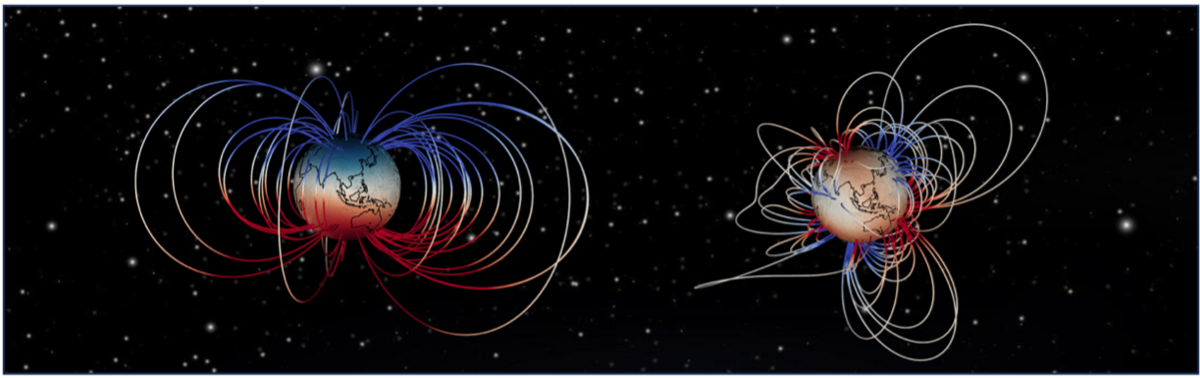
Beyond the decrease in its strength, the magnetic field during GERs does not behave in its usual organized, dipole-dominated way, with a well-defined north and south pole. Instead, it becomes complex and displays more than two magnetic poles. Scientists still do not know whether different GER events share a similar field configuration, or each one is unique. To answer this question, scientists need a global view of Earth's magnetic field. However, our knowledge so far is limited due to sparse measurements, uncertainty in the dating of samples, and limitations in data quality.
Our contribution to GERACLE
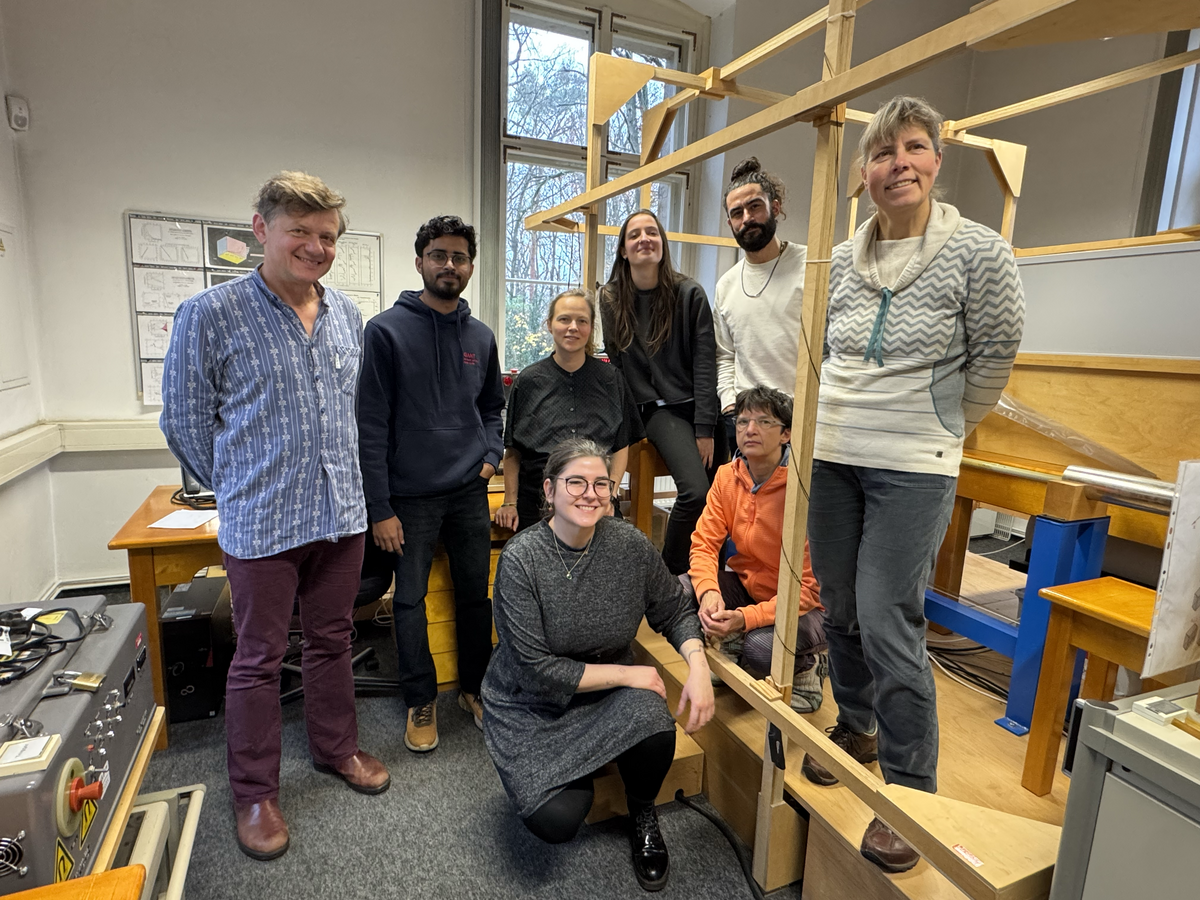
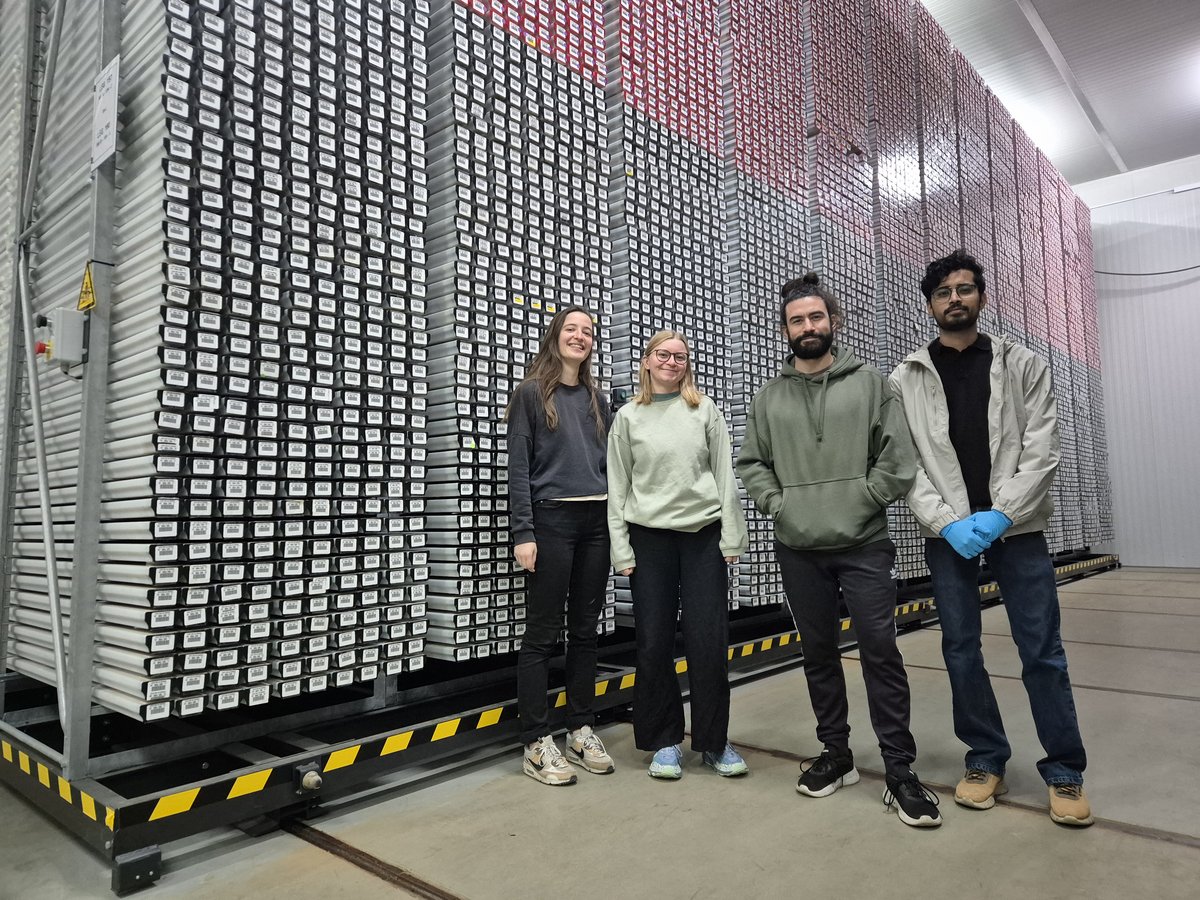
The research group at GFZ, led by Dr. Monika Korte, is now tackling this challenge. The team has extensive experience in reconstructing past geomagnetic field behavior on a global scale. They will measure new paleomagnetic data from archived sediment cores in their laboratory and combine these with existing datasets to build extensive databases and develop the most accurate global models to date. A key part of the project is making sure the data are trustworthy by separating the true magnetic signal from environmental effects that could distort the record and increase uncertainty in the models.
The project will focus on three distinct GER events, two excursions and one full reversal. One of the aims is to understand for the first time the similarities and the differences among these three events. This will be a significant step forward in our understanding of Earth's magnetic history, and will also help scientists to better anticipate what a future polarity reversal might look like, and what consequences it could have for the environment and climate of our planet.